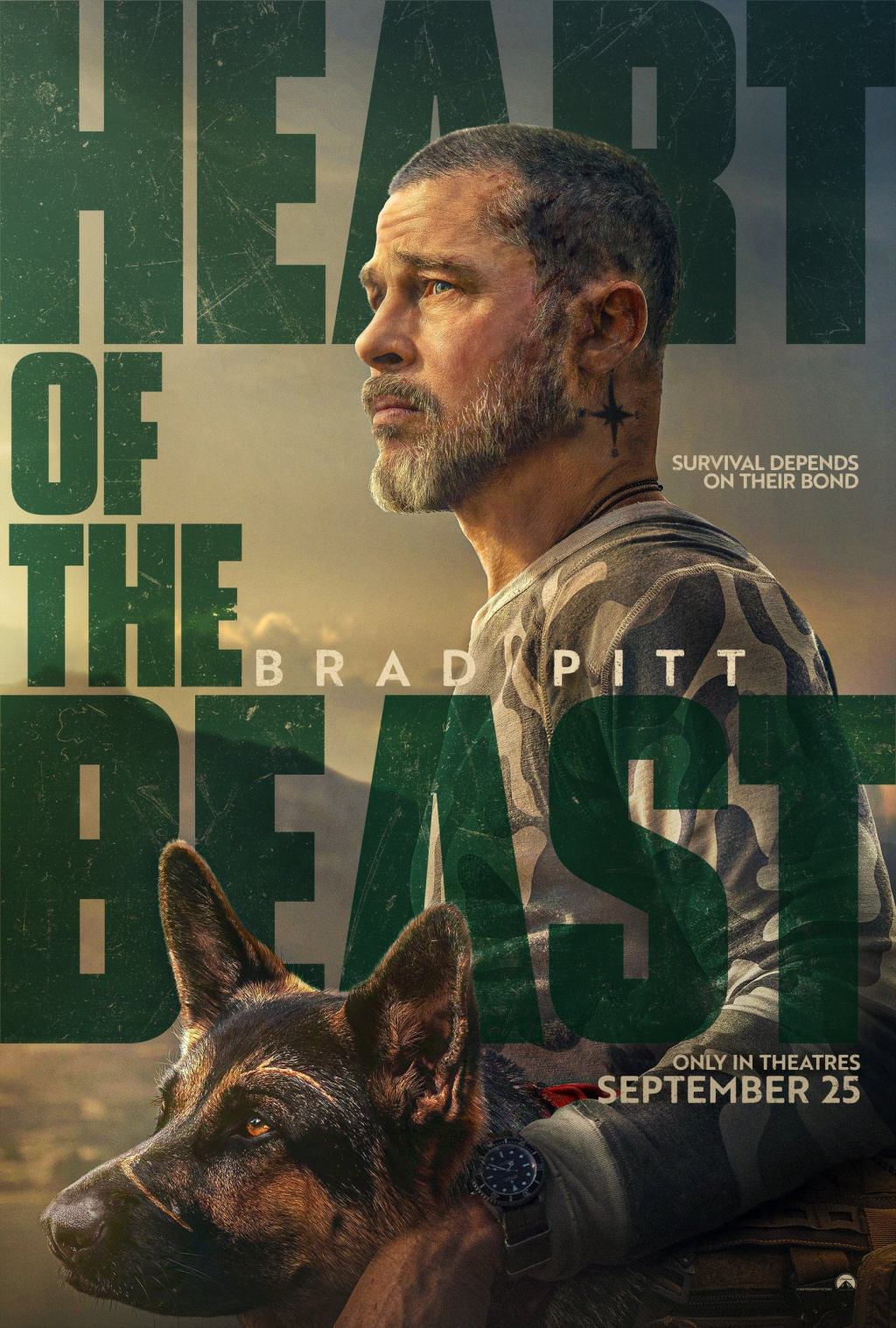
Can we petition the Oscars to open a category for our animal actors? Because Uber, a German Shepherd, who stars alongside superstar Brad Pitt in the new film Heart of the Beast, just delivered one of the best performances I’ve ever seen. GIVE HIM THE OSCAR NOW.
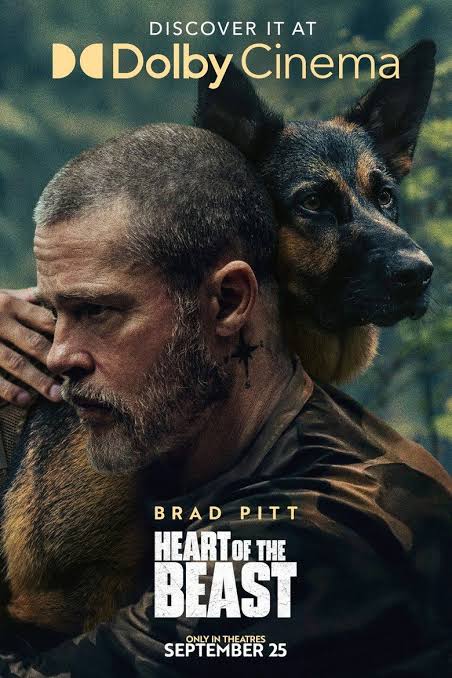
Living a life of seclusion, surrounded by nature, James Belmont and his dog Odin are living their best lives while both simultaneously dealing with the PTSD from their time serving in the military. On a routine trip, Belmont and Odin depart by plane, but Belmont suffers a heart attack mid-flight, causing the Cessna Skywagon to crash into a body of water. Odin is ejected but survives, and after Belmont salvages their gear from the wreckage, the pair set out on foot to hike the roughly 58 miles back to civilization.
Let me reiterate this again, because I’m continually getting roasted for my opinion of this film on my social channels, but I ENJOYED THE FILM.
I truly believe both Pitt and Uber could secure award nominations for this film. However, I do have one major caveat: the pacing felt repetitive and, at times, predictable.
And I want to be specific about what I mean by that, because my issue isn’t simply that the movie is slow. I actually don’t mind a slow-burn survival film. In fact, the slower moments here are important because they allow us to spend time with James and Odin and understand their relationship, their trauma, and the isolation they’re living in.
My problem is that the film doesn’t always create enough buildup to its action sequences.
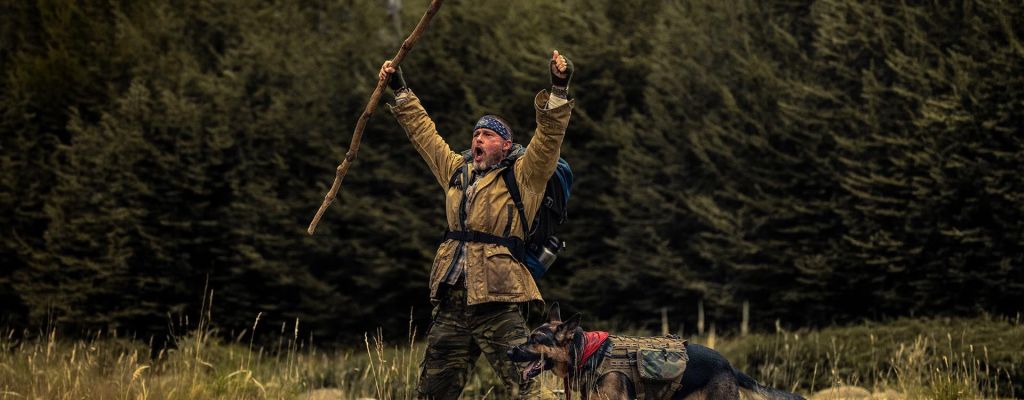
The structure eventually becomes pretty easy to anticipate: James and Odin walk through the wilderness, we spend time watching them navigate the terrain, and then suddenly they’re thrown into another life-threatening situation. We get a few minutes of intense, beautifully executed action, they survive, and then we’re back to walking again.
Eventually, I stopped wondering what was going to happen and started wondering when the next thing was going to happen.
That’s where the tension started to disappear for me.
The action sequences themselves are often fantastic. They’re visceral, physical, and genuinely thrilling. But I wanted more escalation leading into them. I wanted the danger to feel like a natural consequence of everything James and Odin had been experiencing rather than something that periodically arrives because the movie has reached its next action checkpoint.
It’s almost like the film is structured as a series of peaks and valleys. The problem is that after enough repetitions, you start to recognize the shape of the next peak.
And that’s frustrating because the ingredients for a more steadily escalating survival story are absolutely there. James’ deteriorating condition, his PTSD, the isolation of the wilderness, Odin’s dependence on him, and the growing realization that James may not make it home all could have been used to continually raise the stakes.
Instead, there are moments where it feels like we’re simply walking toward the next dire situation.
That doesn’t mean those quieter scenes are pointless, though. In fact, I think the film is quietly building toward something much more emotional than simply getting James and Odin back to civilization.
Paramount Pictures
SPOILERS AHEAD!
.
.
.
SERIOUSLY!
.
.
.
I’M GOING TO TALK ABOUT THE ENDING!
.
.
The bond between James Belmont and Odin is ultimately the heart of this movie. The wilderness journey isn’t just about survival. It’s about James slowly coming to terms with the possibility that he won’t be there for Odin forever.
And by the end, James realizes his time is coming to an end. Instead of continuing to fight simply to make it home, he gives Odin final instructions and leaves a note for his new owner.
That moment completely reframes the journey.
James isn’t just trying to survive anymore. He’s trying to make sure Odin survives without him.
And I think that’s what makes the ending so powerful. After spending the entire film watching these two depend on one another, James’ final act of love is accepting that he has to let Odin go.
One final heroic act to save the love of his life.
A canine who has been there through his trauma, his isolation, and his darkest moments, and who, in his own way, understands the man James is beneath all of it.
That’s why, despite my frustrations with the pacing, the ending worked for me. The journey may have felt repetitive at times, but the emotional destination hit.
And yes, I am still petitioning the Academy for an Oscar category for Uber.
GIVE. THAT. DOG. THE. OSCAR.


Leave a comment