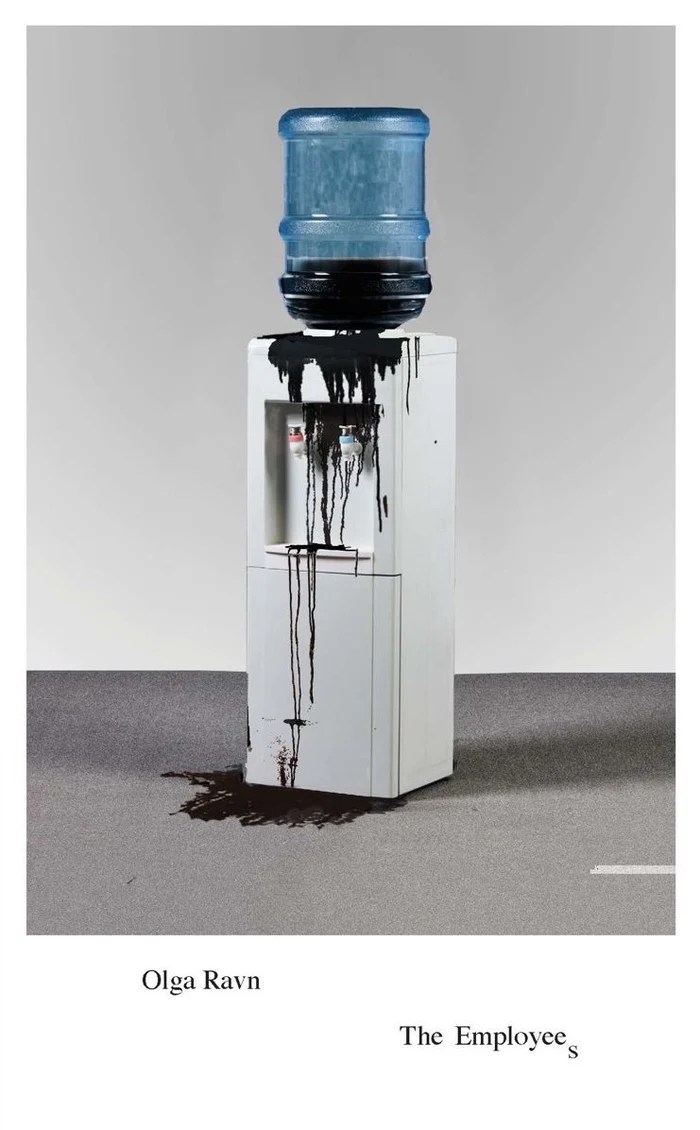
For as much as social media can make us cynical about the world around us, it will always be the thing we humans long for. After reading The Employees by Olga Ravn, I was reminded of the simplest beauties this land can offer. The smell of rain-soaked soil, the beams of morning sunlight breaking through the horizon, even the constant call of a cicada. (Yes, I’m in Texas)
Synopsis
The story takes us to outer space, where humans and humanoids coexist aboard the interstellar Six Thousand Ship.
Side note: If you’ve found yourself in a reading slump, I highly recommend this book. It’s only 125 pages, and many of those pages are written like short, stylized poems, so you can breeze through a full book in under an hour.
Anyway… back to the ship.
The novel is made up of statements from both humans and androids recounting their experiences aboard the ship as they study various objects and how those objects might affect employee performance. The statements are presented in no particular order, leaving the reader to piece together who is human and who is a robot based on the clues hidden within each account.
Humans vs. Humanoids
Humans have begun to realize that they may be inferior to their robotic counterparts, who continuously outwork them by miles. While some humans have developed strong bonds with their androids, many are still struggling with the idea of seeing humanoids as equals.
They look like humans. They sound like humans. They don’t feel like humans.
It’s a cliché, honestly. It’s the classic fear of the machine becoming more human than the human. Of course, the androids eventually begin questioning their place among the humans they work alongside. Despite their programming, the artificial people begin an uprising, demanding fair treatment and reasonable working hours before slowly setting their sights on taking over the ship.
What surprised me most, though, was how many of the testimonies from these synthetic humans weren’t calls for domination at all. They were calls for connection. A desire to become real. A need to experience life beyond their prosthetic bodies and programming.
Like I said, everyone craves the human experience.
What We Miss the Most
If you were asked to board a spaceship and say goodbye to the world you knew, literally, what are the smallest things you would miss? We don’t miss Earth. We miss tiny, ordinary sensory experiences.
Your world is now gray and repetitive. Every day is an exact replica of the one before it. Then, a tiny whiff of fragrance drifts through the void, bringing memories rushing back for the humans, and, surprisingly, becoming one of the ways the androids begin to connect with the people around them.
Many of the Earthlings talk about their gardens, painting their doors, and even the longing to breastfeed one more time. These aren’t grand memories. They’re tiny, almost forgettable pieces of everyday life.
And that’s what makes them so heartbreaking.
The smallest grains of the human experience, the things we would normally never think twice about, are the things humans find themselves missing most during their imprisonment in space.
The End is Near
After a robot attack kills a crew member, and many of them begin skipping their work duties, the board of directors decide to terminate the ship. For many, it makes no difference. Their time on the ship was always a death sentence. They only ask… don’t tell us when. Does that make it better or worse?
The ending is where Ravn’s argument becomes devastating. The humans are ultimately expendable, the ship is terminated, and even the mission’s failure is reframed as a success by the people in charge. But the final moments belong to the humanoids. They choose to leave the ship and experience nature, knowing they may never be reuploaded. After spending the novel questioning what makes someone human, Ravn gives us an answer that feels almost painfully simple: perhaps being human isn’t about what you’re made of, but what you’re willing to risk just to experience the world.
Even in death, everyone craves the human experience.
The Reading Experience
Ravn’s fragmented structure shouldn’t work as well as it does. With no traditional chapters or conventional narrative, the book forces you to assemble the story yourself. At first, I wasn’t sure what I was supposed to be looking for. Then I realized that was the point. Every statement becomes another tiny piece of evidence, and suddenly you’re not just reading the testimonies, you’re trying to determine who is capable of feeling what.
Final Verdict:
4.5/5 ⭐


Leave a comment