Cubbie Chats

Hey Nerd! Welcome to my site! It's pretty much where all the hot millennials go. If you're here, it's probably because you're a film and literary enthusiast. Let's chat.

Cubbie is the host and creator of Cubbie Chats, a pop-culture podcast covering film, television, books, fandom, and the creators behind the stories we love. As a member of the North Texas Film Critics Association, Cubbie brings a critic’s perspective with a fan-first voice—connecting audiences with the people and stories shaping pop culture.

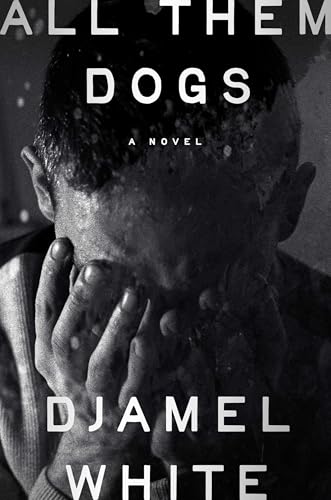
  • Do horrible people deserve forgiveness? This was the question constantly asked throughout the novel, All Them Dogs by Djamel White. Recently, longlisted for the Booker Prize, the novel follows Tony Ward, attempting to escape retribution, as he heads back home to West Dublin, Ireland. After five years, he begins to realize his past may be closer than he thinks, and aligns himself with Darren ‘Flute’ Walsh, the right-hand man of crime boss Aengus Lavelle. However, when a mutual attraction begins to flourish between Tony and Flute, Tony finds the protection offered by Flute and Aengus beginning to fade. Can Tony escape the shadows of his past, or will the cycle of violence claim him next?

    I need you to trust me now. Please power through the first couple of chapters, because at times it can feel like you’re reading the book of Genesis and Moses is listing off the biblical family tree. There were so many characters being introduced in the gang hierarchy, I had to pull out the handy dandy notebook to keep track of everyone.

    From then on, the reader gets to explore themes of violence, toxic masculinity, vulnerability, queer desire, retribution and guilt. The violence is really everything you’d expect from a season finale of Sons of Anarchy, but Djamel beautifully highlights how these gangs see no humanity. There are no victims to these crime bosses, only people who have wronged them. It is definitely a timely reflection of today’s society, as story after story comes out of horrific tragedies around the world, yet people are so quick to ignore the victims and highlight the perpetrator. Ugh.

    Toxic Masculinity and Queer Desire

    How do you explore queer desires in a hyper-masculine field of work? I guess the answer is… you don’t. Tony’s queerness isn’t necessarily the thing he struggles to accept—the problem is that tenderness, vulnerability, and intimacy don’t fit comfortably within the masculine identity he’s constructed for himself. Tony has built an armor of protection around himself, an armor built from layers of toxic masculinity: violence, reputation, fearlessness, and physical dominance to shield anyone from thinking he doesn’t check every outdated criterion of what he believes a man should be. It’s a self-sustaining mask where being dangerous means being respected. It seems he’s quite open to his queer desires, and he spends much of the novel longing for Flute. Their relationship represents belonging and hope, something the reader will find themselves wishing for both of them. The admiration they have for one another, both emotionally and physically, brings warmth to an otherwise dark and violent novel. It’s a manifestation of Tony’s desire for male affection, for the idea that not every connection he makes with another man has to result in violence, and that intimacy can exist without weakness.

    Now, obviously, he isn’t going to be waving the Pride flag anytime soon, but when you’ve spent your life hiding in the shadows of crime, keeping one more secret hardly seems like a burden.

    All Them Dogs explores the balance between vulnerability and masculinity, longing and acceptance, guilt and retribution, leaving us yearning for a happy ending that won’t come. Djamel White creates a character who has grown to believe that a man means being hard, dominant, and emotionally impenetrable while being forced to confront desires that demand the exact opposite. Tony’s past casts a shadow over his life, leaving him unable to fully trust those around him. His inability to feel remorse and the chip on his shoulder make him destructive not only to himself but to those around him. Knowing the crimes he has committed, how do we find ourselves rooting for his redemption? Do horrible people deserve forgiveness?

    I really hope to see this book shortlisted for the Booker Prize. My final verdict is…

    4.5/5 ⭐️
    Leave a Reply

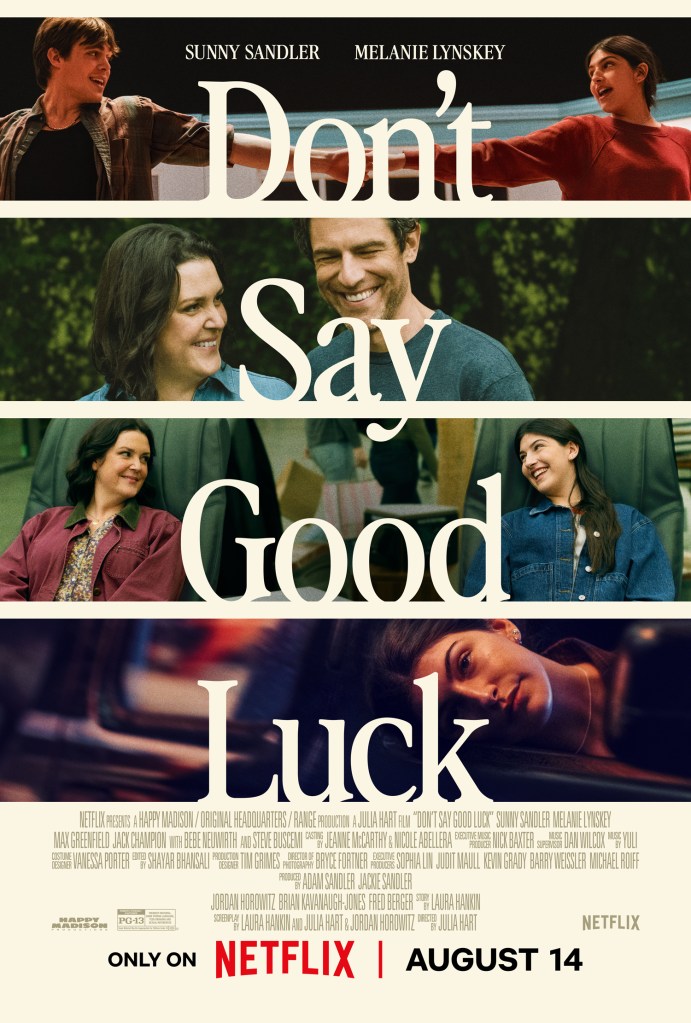
  • Sometimes we just need to cry. Sometimes we just need to release the worries, stressors, and emotions weighing on us from day to day. Well, Netflix’s new film Don’t Say Good Luck seems determined to make you cry. Produced by Adam and Jackie Sandler, the film follows Sophie Birenbaum, portrayed by Sunny Sandler, who lands the lead role in her high school theatre production of Waitress, when she suddenly learns her mother is dying of cancer.

    I would like to state for the record that nepotism from the Sandler family is the only type of nepotism I will support. Sunny Sandler delivers an honest and believable performance that captures the melodramatics of high school life while still carrying the weight of a terminal cancer diagnosis. Her singing voice always informed the viewer of where her true emotions, frustrations, and anger lay. Those emotions come to the surface most clearly during her audition of “When He Sees Me,” which mirrors the anxiety Sophie is experiencing with that of Dawn, the character singing in Waitress.

    The script brings little new to the coming-of-age or cancer drama, and at times failed to really deliver the tearjerking impact it intended to.The writing can also get lost in the frivolous hyperbolic reactions of a teenager, which pushes the emotional weight of the cancer storyline to the backseat. And yet, somehow, you may still find your eyes swelling with tears of joy, laughter, grief, and dread.

    Ultimately, while Don’t Say Good Luck can feel juvenile at times, its heart is in the right place. Beneath the teenage dramatics and familiar storytelling is a film about love, loss, and the people who help us carry the weight of both. Audiences may find themselves laughing at one moment and wiping away tears the next, but the film’s greatest strength is its reminder that we do not have to face life’s hardest moments alone. Don’t Say Good Luck may not reinvent the coming-of-age drama, but it offers something just as meaningful: a tearful, heartfelt story about togetherness when we need it most.

    Honorable mention to Max Greenfield for an outstanding performance as well!

    Final Verdict:

    Rating: 3.5 out of 5.

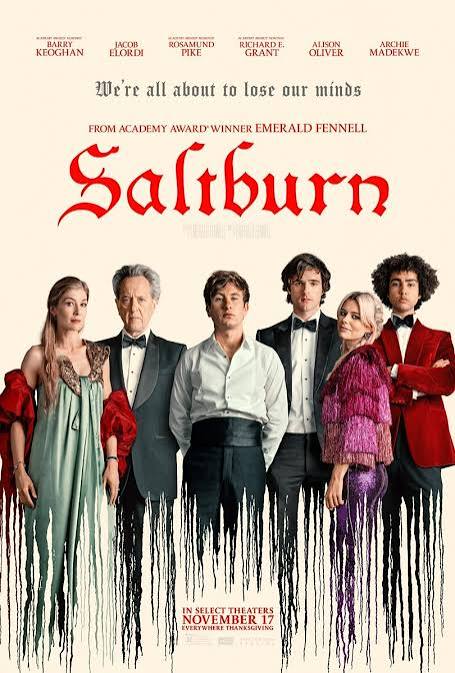
  • Saltburn is a titillating story built around shock value and, unfortunately, very little actual story. Barry Keoghan plays Oliver Quick, a socially awkward Oxford student who becomes obsessed with Felix Catton (Jacob Elordi) and manipulates his way into the orbit of Felix’s wealthy family. What begins as an intriguing exploration of class, obsession, and privilege eventually feels more interested in shocking the audience than developing the story underneath it.

    And Saltburn certainly knows how to shock. Much of the hype surrounding the film revolves around Oliver drinking bathwater, painting himself in menstrual blood, and generally crossing every possible line of social decency. The problem is that once the shock wears off, there isn’t always much left underneath it. The ending twist is genuinely impressive, but getting there can feel like watching a series of increasingly outrageous moments stitched together. Side note: If Barry Keoghan becomes erect, does he instantly pass out?

    Still, I’ll give the movie this: it is impossible to forget. Emerald Fennell knows how to create imagery that gets burned into your brain, whether you want it there or not. And speaking of imagery, that dance scene at the end? 

    Final Verdict:

    2/5 Stars